
Article
Article | May 12, 2026
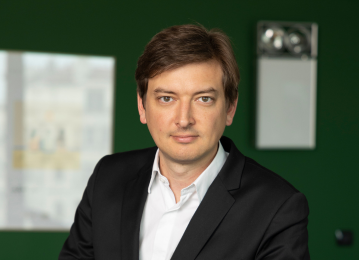
A conversation with Adrien Couret, CEO of Aéma Groupe. Adrien Couret took part in the founding Utopias by SWEN event in June 2025. SWEN Capital Partners, which manages the SWEN Terra fund dedicated to regenerative agriculture, is a subsidiary of OFI Invest, itself part of Aéma Groupe, a mutual protection group. As this first cycle draws to a close, he reflects on what the journey taught him, and on his vision of an economy that repairs rather than depletes, an economy in service of the living world.
Adrien Couret: For an insurer, and especially a mutualist one, these issues are deeply connected to what we do and what we care about. We hold a mutualist, inclusive vision of the economy, one that takes people, their environment, and entire ecosystems into account.
We believe that investment, by businesses and citizens alike, can reconcile social and economic progress with the protection of the environment and biodiversity. And critically, managing climate risk exposure upstream is a core concern for us, not a peripheral one.
When you’re an insurer and you look at the data from the last ten years, not projections, actual data, you can’t keep looking away. Climate-related losses have tripled in thirty years. Tripled. That’s not a curve in an IPCC report. It’s what our teams see in the field after every extreme weather event. Houses cracked because clay soils shrink during droughts. Farms devastated by floods that healthier soils might have absorbed. For us, this is a reality we are fully convinced of. On climate, there is a responsibility: to work on reducing populations’ exposure to risk. And once you accept that, the question of soil becomes unavoidable.
Adrien Couret: It resonates deeply. Perhaps especially because I run a mutual protection group. The first utopia in French literature arrived with Rabelais as a humanist project. And beyond that, utopia, far from being an escape from reality, is a force for projecting toward the future.
There’s a story I sometimes tell. Macif was founded in 1960 by tradespeople and industrialists from Niort who refused to pay insurance premiums calculated to enrich shareholders they’d never met. It seemed like an absurd idea at the time, a group of ordinary people deciding to pool their risks rather than submit to the logic of capital. Utopian, people said. Today, Macif provides lasting protection to several million French people.
Utopia is a refusal to accept that today’s reality is the only horizon available. What Utopias by SWEN does, bringing together researchers, Michelin-starred chefs, investors, and philosophers around the question of soil, is exactly that. It’s a serious attempt to build a different story about what an economy in service of the living world can look like.
Adrien Couret: On the contrary, it validates the relevance of the choices that the group and its brands, Macif, Abeille Assurances, Aesio Mutuelle and OFI Invest, have historically stood for. What matters here is the order of things: we started from a strong, shared conviction across the group’s brands, and then looked for ways to embody it within our own ecosystem.

An insurer has to care about soil health because degraded soils produce claims. That’s why, when Jérôme (Editor’s note: CEO of SWEN CP) told me about his project, I immediately understood that he was proposing something precisely aligned with what we already believed.
Adrien Couret: By demanding rigor where rigor can be demanded. Within the SWEN Terra fund, SWEN CP does something that matters: every project is submitted to an independent impact committee, composed of recognized scientists, before it ever reaches the investment committee. That’s not a small thing. It means that impact validation doesn’t depend on those who have a financial interest in the investment going ahead. That independence is a real guarantee, not a rhetorical one.
But beyond that, the true safeguard is the nature of the subject itself. Soil quality is measurable. Earthworm populations, organic matter levels, water infiltration capacity, these are physical, biological indicators that can’t be massaged. SWEN Terra’s teams have built scientific partnerships to track these indicators with real precision. In five years, in ten years, the health of the soils in which SWEN Terra has invested will be measurable. There will be concrete evidence. That’s one of the reasons this subject interests me: it holds finance accountable to a reality it cannot abstract itself from.
Adrien Couret: Not yet. Finance has made considerable progress on the declarative side. ESG reports have multiplied, net-zero commitments too, and green taxonomies have been built with genuine care. But there’s a deep disconnect between the tools and methodologies and the physical reality they’re meant to address. We’ve learned to measure carbon because carbon is a gas that can be quantified, modeled, and offset.

But the life of a soil? The complexity of a microbial ecosystem? The resilience of a hedgerow? These things resist standardization. And what resists standardization resists finance. What SWEN Terra is trying to do, and this is why it’s necessary, is to accept that complexity rather than simplify it. Investing in a farm in transition means accompanying a biological process that unfolds over years, sometimes decades. That’s not compatible with quarterly horizons, or even with typical private equity cycles. It requires a different kind of patience.
What this Utopias by SWEN cycle taught me is that soil sends finance back to something it has often lost sight of: the long view. Not the long view people invoke in speeches. The real long view, the one where organic matter rebuilds over ten years, where a hedgerow takes a generation to become useful. Finance has to accept that it cannot control everything on that timescale.
Adrien Couret: I hear it for what it is: a truth stated without rhetorical padding. And that’s refreshing. That kind of directness is sometimes necessary — because we have a collective tendency, one I observe in my own sector too, to wrap bad news in narratives that make it feel manageable. We talk about “challenges,” “transitions,” “issues.” Those words are useful, but they also have an anaesthetizing effect. When a soil is dead, it is dead. Rebuilding it takes decades, in the best case. That reality doesn’t fit neatly into the category of “challenge to be addressed.”
What I found powerful about Utopias by SWEN is precisely its ability to hold both ends at once: the rigor of the diagnosis and the possibility of action. Not “everything is fine,” not “everything is lost.” But: here is what happened, here is why, and here is what people are actually doing to go in the other direction.
Adrien Couret: It changes everything. When Mauro talks about his regenerative gardens in Menton, when he explains how the quality of what he serves on the plate is directly connected to the life happening beneath his feet, he does something a scientific report cannot: he makes an abstract reality tangible. He creates a link between the everyday experience of taste, pleasure, and shared food, and issues that otherwise feel distant.
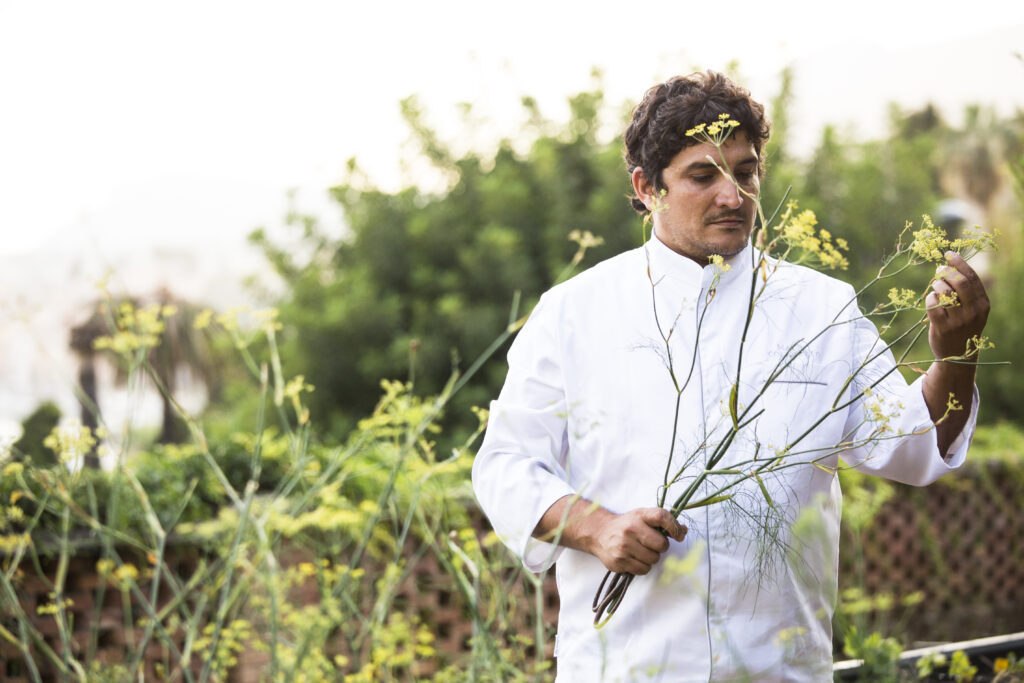
Soil is invisible. We only talk about it in the negative, when it collapses, when it floods, when it stops producing. One of Utopias by SWEN’s bets, and I think it’s a winning one, is that changing behavior at scale requires reaching people through unexpected doors. A chef who talks about the microbiology of his fields like a musical score opens doors that ten years of institutional communication never could. The ecological transformation will not happen through regulation and markets alone. It will also happen through stories. And the most powerful stories are those that connect the sensory to the essential.
Mutualism is a model built on sharing, risk and benefit alike, where solidarity is not in conflict with economic efficiency. Business and the common good are not incompatible. On the contrary: it’s by bringing them together that we’ll be able to meet the challenges ahead. We need to rediscover what made the most resilient societies strong: pooling resources, sharing risks, and building collective safety nets capable of absorbing shocks. A farmer who loses a harvest to a climate event cannot absorb that shock alone. That’s why crop insurance was invented. But without addressing root causes, and in the face of rising risks, particularly climate risks, acting only on consequences has its limits.
What the soil question introduces into my thinking is the idea that certain goods are commons that no one can appropriate or repair alone. Living soil is a common in the deepest sense: it belongs to those who inhabit it, those who cultivate it, but also to the generations that will come after and to ecosystems that have no voice in the matter.
That the shift is possible. And that the people making it happen are already out there. What could have been discouraging this year was the sheer scale of the degradation: 70% of European soils in poor health, decades of microbial depletion, an industrial agriculture that produced exceptional yields for one generation by mortgaging the next. Faced with that, you could feel it’s too big, too systemic, too entangled to really change.
What Utopias by SWEN showed me is that change isn’t waiting. GreenPods, south of Toulouse, transforming an exhausted maize operation into the largest regenerative almond orchard in France. The Bourguignons, training farmers and winegrowers for decades in practices that bring their land back to life. Roland Feuillas in Cucugnan, who went back to the grain itself — growing ancient wheats and restoring to bread something that had been taken from it. These people aren’t waiting for a grand public policy to get started. They’ve already started.
What finance can do, what SWEN CP is trying to do, is accelerate what already exists: give solutions that work the means to scale. And for an insurer whose business is protecting people against risks that arrive too fast, that’s exactly what commitment means: not waiting until the problem becomes unmanageable.
That’s what a utopia is. Not a dream. A horizon that gives you a direction.
Adrien Couret is CEO of Aéma Groupe and author of “Tous sociétaires ! L’entreprise mutualiste, un modèle pour la société du XXIe siècle” (Éditions Autrement, 2022).
Article
Article

Article