
Conversation
Video | July 9, 2026
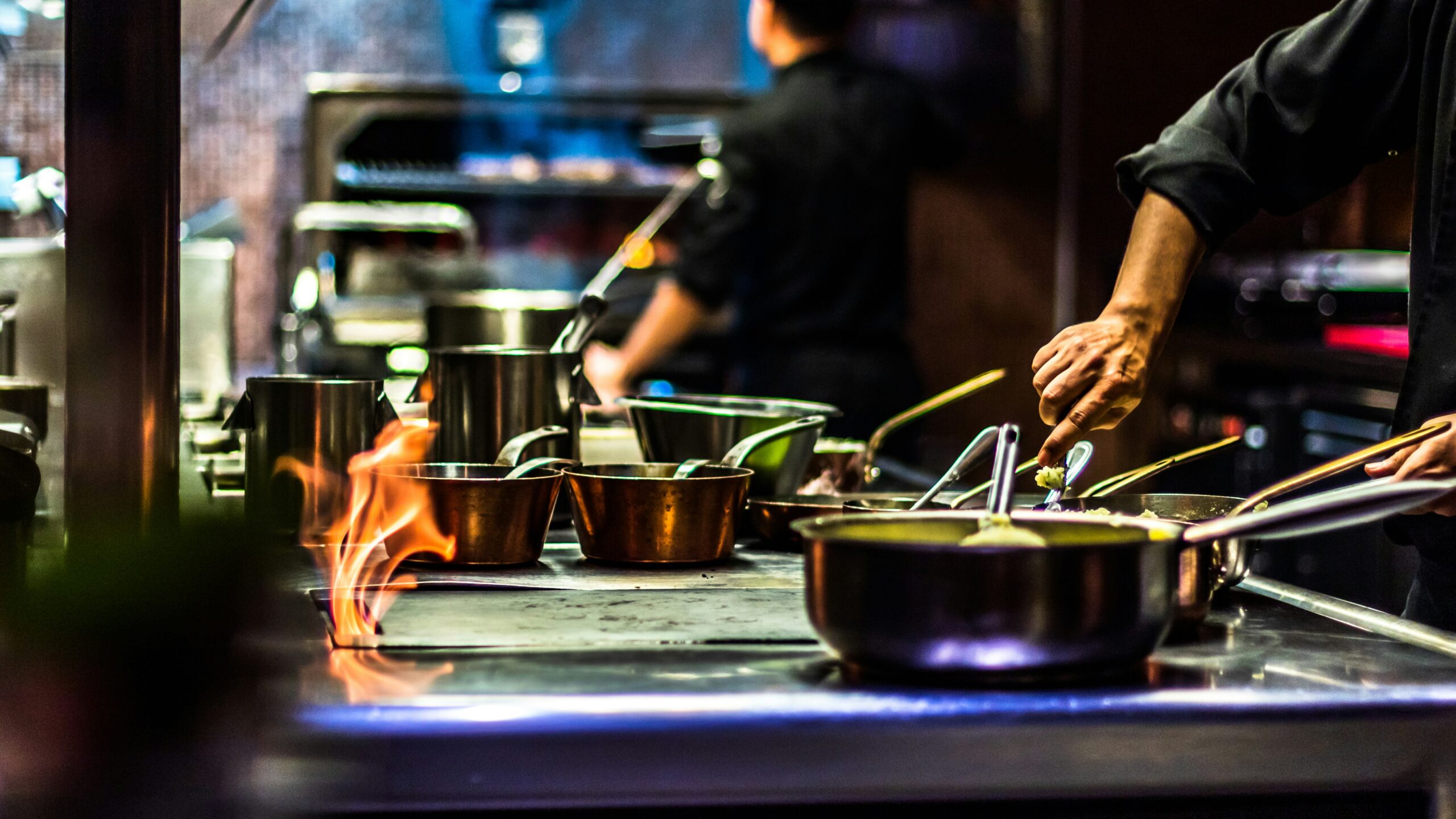
Chloé Charles runs Lago, her restaurant in Paris’s 11th arrondissement, where she has made anti-waste cooking and seasonal ingredients the cornerstones of her culinary identity. Anne Etorre organizes gastronomic events and is finishing a book dedicated to French producers, *Le goût des bonnes choses* (The Taste of Good Things), the result of a year and a half of traveling the country. Brought together to host the evening’s cocktail reception for more than 500 people, they share what regions bring to the plate, and what they consider their duty.
Chloé Charles: A product rooted in its region tells its story through taste. For a vegetable, it’s the way it grew, and that way changes radically depending on whether the land is close to the sea or farther away, whether it’s clay or sandy, exposed to the wind or sheltered. For an animal, it’s what it has eaten, how it has lived, and the landscape in which it has thrived. All of this is reflected in the meat, the fat, and the texture. It is these differences that make a product irreplaceable, and that make our profession so exciting.
Anne Etorre: Tonight, Bresse poultry is the perfect example. They’re raised according to extremely precise specifications, within a defined territory, using practices found nowhere else. The farmer had mentioned to us that she had given a bird to someone outside the appellation’s territory, and that the bird had developed in a completely different way. Terroir isn’t a marketing ploy. It’s a biological reality.
Chloé Charles: Producers are my raw materials, in the most literal sense of the term. Without great ingredients, there can be no great cuisine. This isn’t just a catchphrase, it’s the constraint that shapes everything else. Choosing suppliers, designing menus, managing the seasons: it all starts there. Working with committed producers also means accepting the limitations they impose: availability, seasonality, and quantities. But these are fruitful constraints that force creativity.
Anne Etorre: For me, this relationship has become the central focus of my work. For the past year and a half, I’ve been traveling across France to meet exceptional producers and tell their stories in my upcoming book, *Le goût des bonnes choses*. What I’ve observed is that these people have a relationship with the land, with time, and with living things that is the opposite of industrial logic. They do something that is slow, demanding, fragile, yet fundamental.
Anne Etorre: The idea of featuring the producers here tonight and asking Chloé to prepare their products on the spot made perfect sense. Many chefs would have refused, cooking with unfamiliar ingredients under the pressure of an event is a real risk. Chloé said yes without hesitation. That curiosity, that confidence in the product, that’s what convinced me. Choosing a committed chef, who herself works with committed producers, rather than a run-of-the-mill caterer for 500 people, is a deliberate choice, and it sends a message.
Chloé Charles: For an event of this scale, that’s actually rare. The quality of the products we served tonight wasn’t a compromise, it was our original goal. And that changes everything, including for the guests.
Chloé Charles: A successful region will be one that is respected. But respect doesn’t come naturally: it’s built, it’s learned, and it starts with feeling respected yourself. Tonight, we tried to demonstrate something simple: that it’s possible to host a responsible event on a large scale. Producers are paid fairly. Chefs are paid fairly. Waitstaff are paid fairly. This model exists tonight, and it must become the norm.
Anne Etorre: What worries me is that we continue to mistreat agriculture and those who work in it. We talk about food sovereignty as if it were an abstract concept, when in fact it’s a daily reality, what we put on our plates, what we feed our children and grandchildren. Fighting to ensure that our food is good, healthy, and fair is perhaps the most concrete and urgent thing we can do.
Conversation
Video
Video