

Video

Article | October 2, 2026
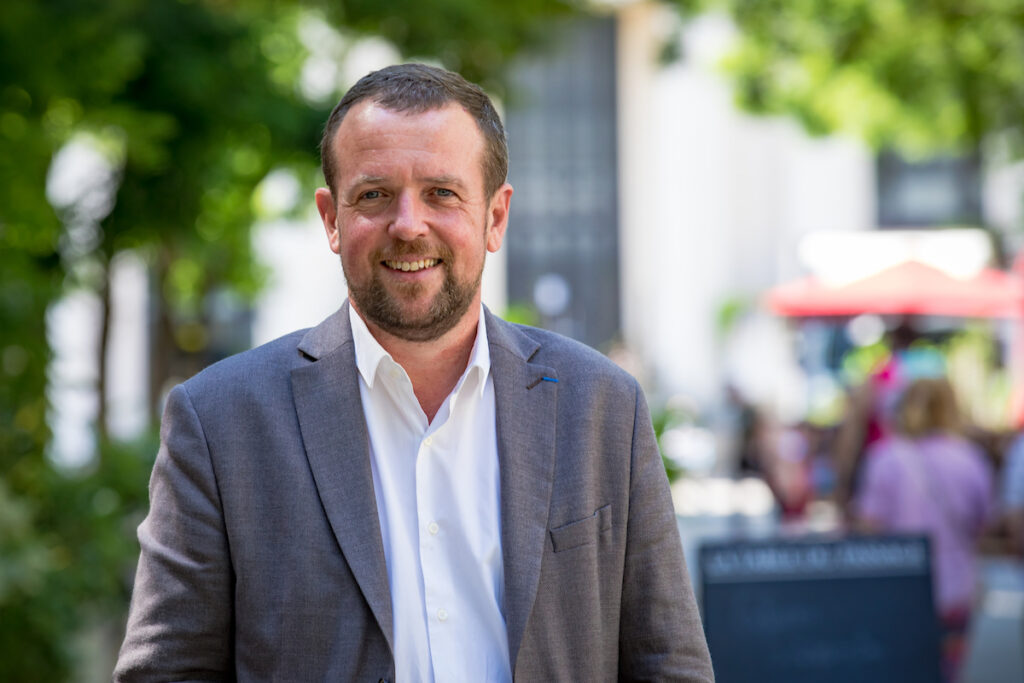
Summer droughts, polluted groundwater, PFAS in the supply network: pressure on water resources is felt first and foremost at local level. For Régis Desroches, who heads Aquasphère, a group bringing together French SMEs specialising in water and organic waste, the answer lies in rethinking how water is used, region by region.
There was a time when water cost next to nothing and seemed endless. Régis Desroches remembers it well, first as a young engineer and later as a plant manager. Today, several French regions face water stress every summer. Extreme weather events cause pollution that seeps into groundwater. And the presence of PFAS in aquifers and supply networks has become a major concern for local authorities and industry alike.
France’s national Water Plan, which requires a 10% cut in water withdrawals by 2030, has set a clear direction for the country. But real change happens at local level, in the decisions made by elected officials and business leaders. The shift is under way; it is still not fast enough given the urgency, and it will need to gather pace.
For Régis Desroches, sustainable water management is already a reality in some places. Mouans-Sartoux is one of the most accomplished examples. Set in the hills behind Grasse, in a region with a structural water deficit, this town of fewer than 10,000 residents has taken a holistic, regenerative approach: careful management of the resource, protection of wetlands, municipally run organic farming to supply school canteens, and active engagement with residents. Every decision fits into a wider vision.
The lesson is that a successful water transition is not built on restriction alone, but on rethinking every use of water across a territory.
This territorial logic lies at the heart of Aquasphère. Across France, many SMEs specialising in water and organic waste have built up decades of technical expertise. On their own, however, they were too small to bid for contracts with major industrial groups and too scattered to offer national coverage. “Our role was to bring them together around a shared vision,” says Régis Desroches.
The group was built first and foremost on proximity: sales and technical teams in every region, able to work on site, not only to install equipment but to provide monitoring, maintenance and after-sales support over the long term. It then set out to cover the full value chain: clean water, wastewater and anaerobic digestion, the process that turns organic waste into biomethane.
A territory’s water transition cannot rest on local authorities alone. Industrial companies, among the largest users of the resource, have a full part to play. According to Régis Desroches, there is no single argument that will persuade them to change their practices. A CSR director committed to reducing their group’s water consumption will respond to environmental considerations: protecting the resource, lowering the water footprint, meeting sustainability goals. A maintenance manager dealing with tight budgets or a shortage of skilled technicians will want clear answers on cost and operational reliability. Because Aquasphère’s teams are based locally, they know these people and can tailor their approach to each one.
Whoever they are speaking to, the core message stays the same: “Wasting water is no longer sustainable, either economically or environmentally. And the solutions already exist.” Ultimately, sustainable water management in every territory depends on public and private players moving in the same direction.
Video
Video
Conversation