
Article

Article | May 12, 2026
Last February 11th, France's National Assembly took up the so-called "Duplomb Bill" for another round, seven months after a petition against it gathered 2.1 million signatures. Beneath the political noise, two very different ideas of competitiveness went head to head: one laser-focused on protecting volumes and keeping costs low on paper; the other taking a harder look at risk, externalities, and what "sustainable" actually means over time. This isn't just a political divide. It's an economic one.
For years, inaction had a convenient alibi: uncertainty. That alibi is gone. The science on soil erosion, pesticide health impacts, biodiversity loss, and climate vulnerability in farming systems is now robust. We know. And yet, too often, we keep reasoning as though the dominant model were the only rational choice.
The most common argument is an economic one: protect competitiveness, don’t penalize producers, keep volumes up. That logic holds, but only if you don’t look at the full bill. When a farming model degrades soils, deepens dependence on inputs, drives up decontamination costs, and defers health expenses down the line, those costs don’t vanish from the ledger. They just move to someone else’s column. This isn’t a moral argument. It’s an accounting one.
A system that massively externalizes its costs isn’t efficient, it’s artificially cheap. In a fiscally constrained environment, continuing to ignore those deferred costs is a serious gamble.
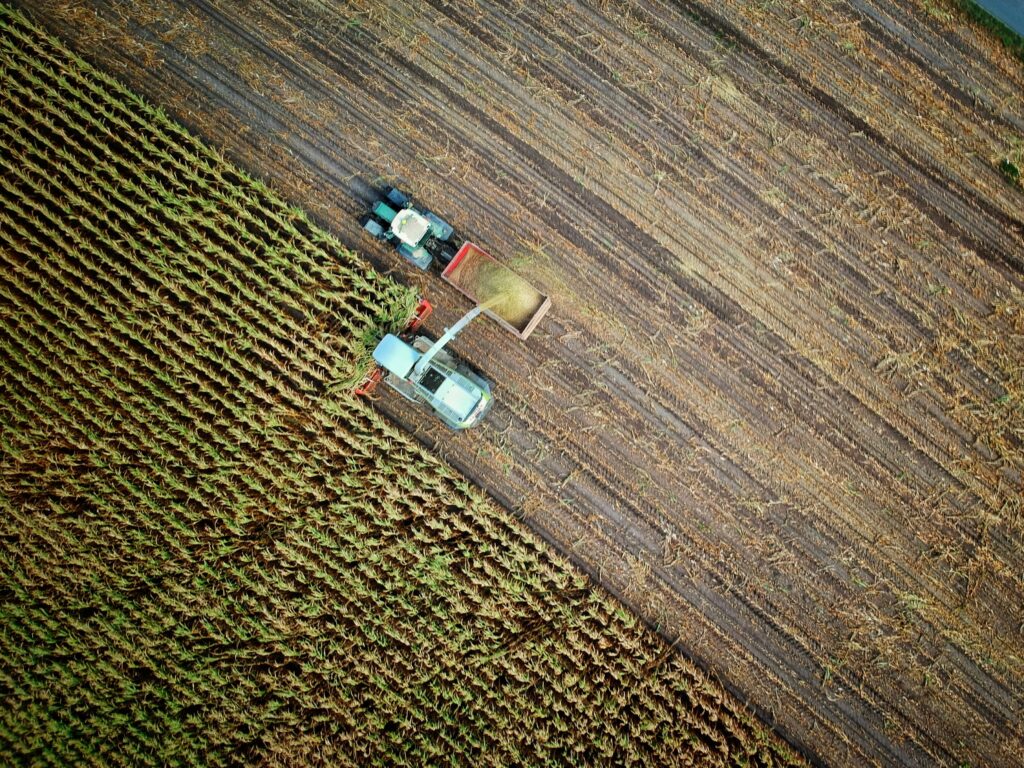
There’s also a persistent misconception worth addressing: agroecology and regenerative agriculture are often framed as a step backward. In reality, they draw on sophisticated scientific knowledge, biological interactions, crop diversity, living soil dynamics, organic carbon sequestration, water management. True modernity might mean accepting that technology doesn’t replace natural equilibria. It has to work with them.
I run an asset management firm. Writing legislation isn’t my job. Allocating capital is. If we accept that certain farming models generate deferred costs and undermine their own productive base, the question becomes straightforward: what do we choose to finance?
It is possible to direct investment toward farms engaged in genuine soil regeneration. It is possible to support farmers transforming their practices rather than indefinitely subsidizing models built on ever-increasing inputs. At SWEN, that’s the bet we’ve made, and not purely out of conviction. It’s a credible hypothesis: regenerative models can work economically, reduce structural risks, and generate long-term value.
The capital we’ve mobilized remains modest relative to the scale of the transformation needed, and investors can’t substitute for public policy.
But the goal is to demonstrate that regeneration can be profitable. As that credibility builds, capital allocation will follow. Finance rarely moves on principle, it shifts when a model proves it can last.
The February 11th parliamentary session showed just how divisive this issue can become. And yet, protecting soils, cutting hidden costs, safeguarding public health, and ensuring stable farmer incomes shouldn’t belong to any one political camp.
Debate the instruments, debate the timeline, but ignorance can no longer justify inaction. We know that some models erode their own foundations. We know alternatives exist. The real question is simple: what do we choose to fund?
At our scale, we’ve chosen to direct capital toward regeneration rather than depletion. Not as an ideological statement, but because, over the long run, it’s the most rational position available. Maybe the real realism, today, is finally aligning economics and ecology.
Article

Article

Article