

Article
Conversation | May 12, 2026
Biodiversity integration and soil quality are increasingly central considerations in real estate development. The adoption of more responsible practices and the commitment to reducing the ecological footprint of operations are becoming structural priorities. This approach is grounded in a logic of continuous improvement, with measures adapted to the specific constraints and characteristics of each site.
At Ofi Invest Real Estate, this commitment translates into concrete actions, embedded from the earliest stages of project design, with the goal of delivering developments, on behalf of our clients, that align with principles of ecological regeneration and site-specific adaptation.
A core focus concerns the creation, restoration, or preservation of natural ground areas, which can contribute to improving soil quality, enhancing water infiltration, and providing micro-habitats for various species.
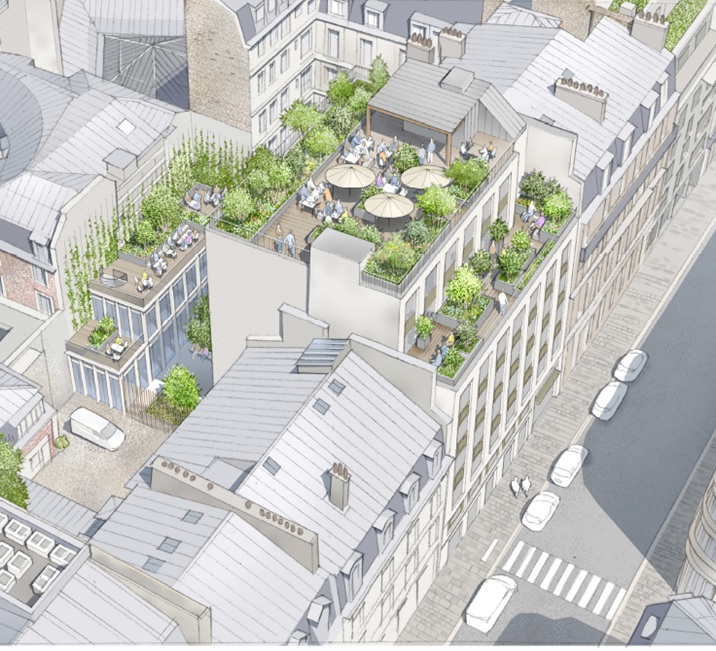
At 32 rue de Lisbonne in Paris’s 8th arrondissement, for example, an interior courtyard will be created, part of which will feature natural ground with extensive planted areas. This approach illustrates how renaturalisation and circular economy principles can be combined where site conditions allow.
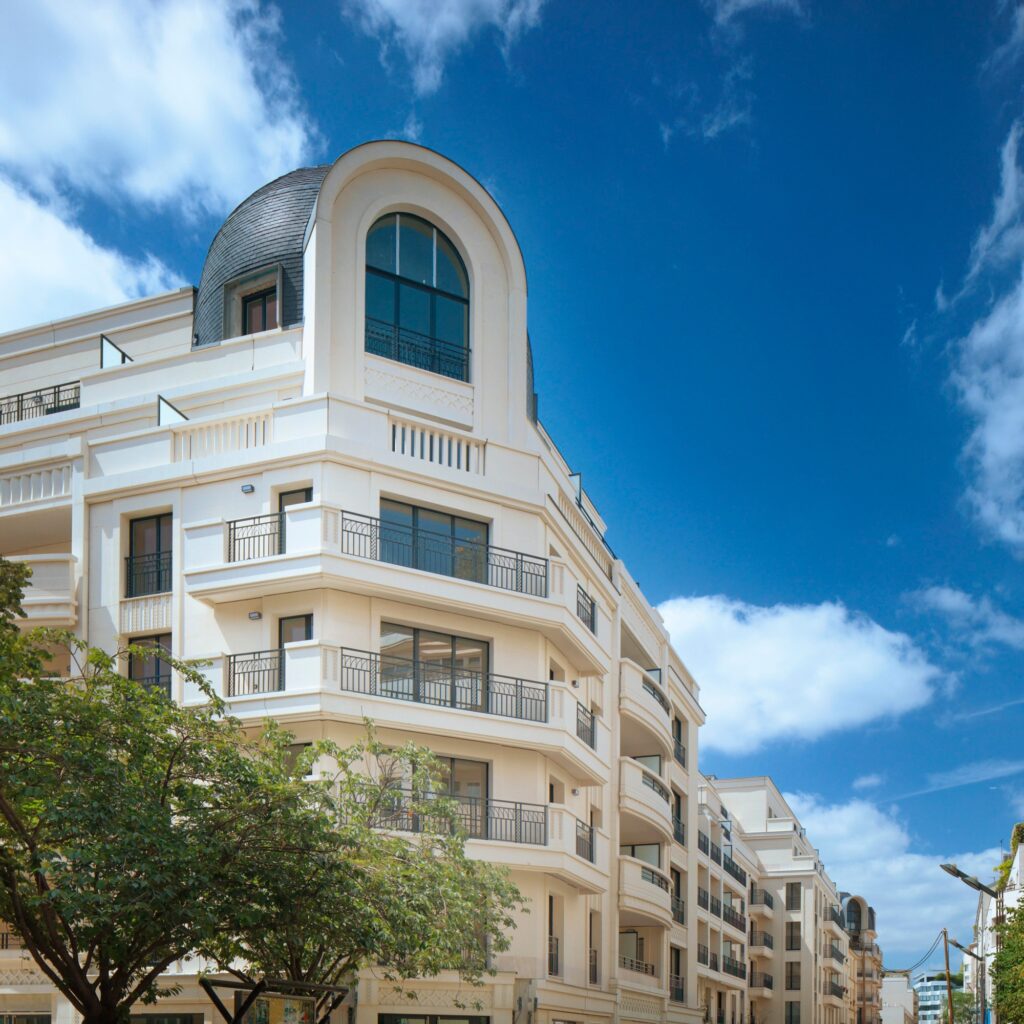
In Levallois-Perret, the Zelmis residential development similarly transformed a previously fully artificialized plot into a genuinely green urban environment, with extensive natural ground areas providing new ecological refuge at the heart of the city.
Zelmis – Levallois-Perret©Thierry Lewenberg-Sturm
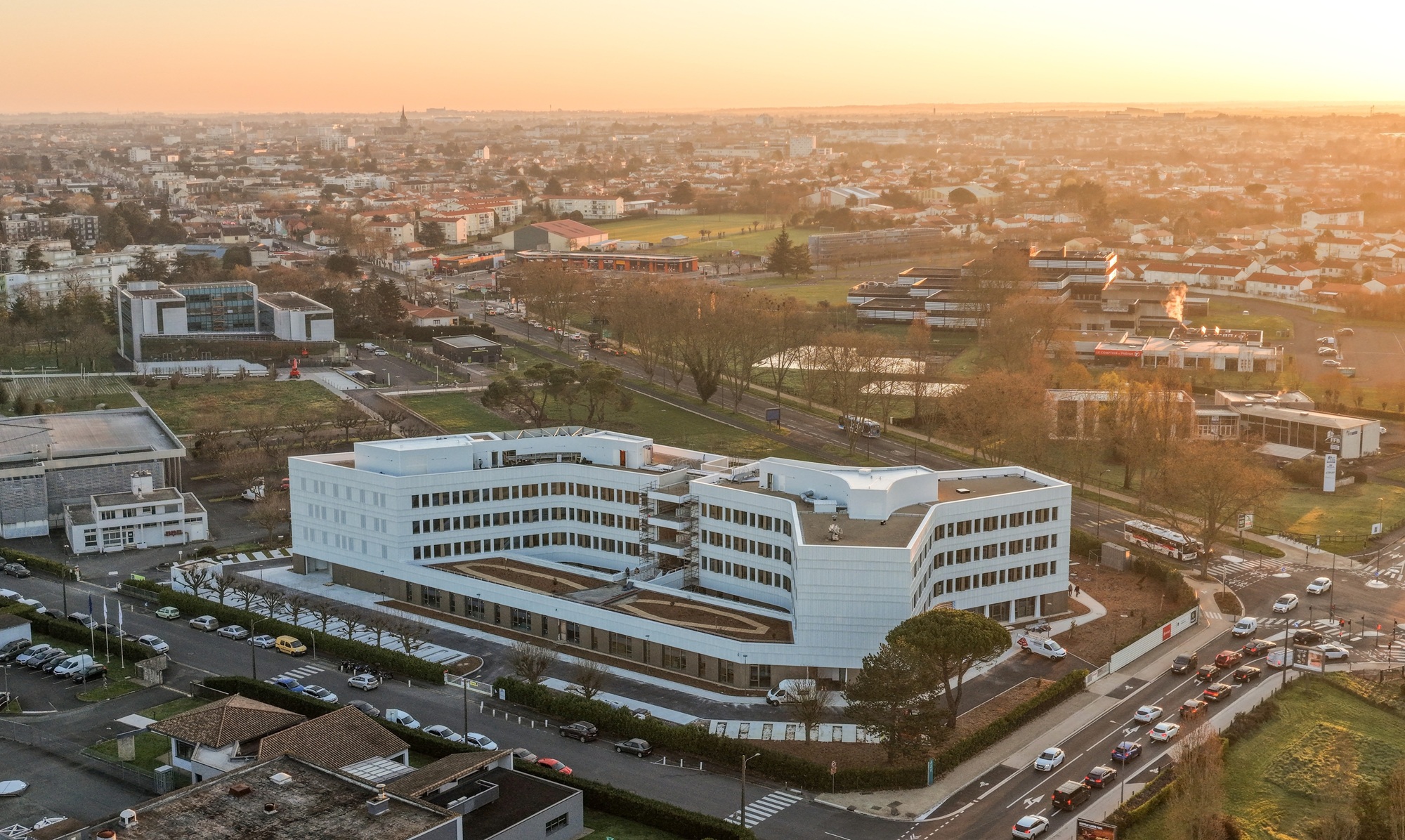
Regeneration extends beyond vegetation: the reuse and recycling of materials from deconstruction represents another key lever. Across several projects — including the rehabilitation and extension of the Jacques Vandier building in Niort and the construction of the Spotlight building in Issy-les-Moulineaux — this approach has been integrated to limit the extraction of new resources, reduce waste, and embed circular economy principles into project delivery. Material reuse also shapes certain design decisions, encouraging more resource-efficient solutions.
Where necessary, soil remediation operations are undertaken prior to construction. These aim to restore safe conditions on affected sites and secure both current and future land uses. In situations where on-site impacts cannot be fully mitigated, ecological compensation measures — whether in situ or ex situ — may be considered, including the creation of green spaces, planting programmes, and dedicated ecological infrastructure.
Each project is subject to specific analysis, including ecological assessments and diagnostics, to ensure solutions are appropriately tailored to the actual conditions of the site.
Stormwater management represents an additional area of focus. Where technical conditions allow, collection, infiltration, and reuse systems are incorporated to reduce pressure on drainage networks and support, for example, the irrigation of green spaces.
Partial de-waterproofing of certain exterior surfaces — as envisaged at the 32 Lisbonne asset in Paris — can further improve infiltration capacity and help mitigate urban heat island effects.
Perspective projet 32 Lisbonne, Paris 8eme
These various measures — natural ground creation, greening, material reuse, soil remediation, water management, and urban micro-forest planting — do not constitute a single or systematic solution. Their implementation depends on a range of regulatory, technical, financial, and urban factors.
They nonetheless reflect a commitment to integrating practices that respect the natural functioning of each site, while meeting client expectations and the specific requirements of each operation.
 Benoît Iorio,
Head of Project Development,
Ofi Invest Real Estate
The assets referenced may be held by investment funds or under civil real estate mandates (loi Hoguet). The information presented is provided for illustrative purposes only and does not constitute investment advice, a solicitation, or an offer relating to any financial product or real estate asset.
Article
Article
Article